

Summary:
- The gut has the potential to influence mood, depression, and anxiety
- Support
gut health to support mental health - High-fiber, prebiotic foods, and probiotics support beneficial gut bacteria
- Changes in appetite, weight, diarrhea, and nausea are associated with mental health disorders
Solutions/Shop:
How Gut Health Affects Depression and Anxiety: Understanding the Microbiome’s Role in Mental Health
Recent research reveals that the trillions of microbes living in your gut might play a significant role in your mental health, influencing everything from your mood to your anxiety and depression levels. Welcome to the fascinating world of the gut-brain axis, where your digestive health might just hold the key to your emotional well-being.
It’s long been known that the brain communicates with the gastrointestinal (GI) tract. When you feel stressed, your brain sends signals to the digestive tract that trigger GI symptoms, such as an upset stomach or diarrhea. Recent research has revealed that this communication goes both ways. An irritated GI tract sends signals to the brain that can trigger mood changes and sleep problems. More recently, research is in the process of revealing that the microbes living in your gut play a vital role in this bidirectional communication, influencing your brain and mental well-being.
Read more here: Prebiotics, Probiotics, and Microbiome Magic, The Gut-Brain Connection
Books: The Psychobiotic Revolution…
A Symbiotic Relationship
The Gut-Brain Axis: The gut and brain communicate bidirectionally, affecting both mental health and digestive wellness.
The gut-brain axis refers to bidirectional communication between the gut and the brain. This two-way communication is a dynamic system that sends, receives, interprets, and responds to information. It includes both direct and indirect pathways that link the emotional and cognitive centers of the brain with intestinal function. This likely explains why GI symptoms are often reported in mental health disorders and conditions. Changes in appetite and weight are common features of major depressive disorder (MDD), while symptoms of diarrhea and nausea are common among individuals who have anxiety disorders. Additionally, mood disturbances, anxiety, and stress are well-recognized as playing a role in GI conditions such as irritable bowel syndrome (IBS) and inflammatory bowel disease (IBD).
Try: ProbioMood
Read more: What Is IBS? What Isn’t?, What Are Mood Disorders…
The Gut Microbiota-Brain Axis and Mental Wellbeing
How gut health affects depression and anxiety
Gut Microbiota: The gut influences mood, depression, and anxiety through immune system interactions.
The lining of your gut and every surface of your body is covered in trillions of microscopic organisms – mostly bacteria. Collectively, these organisms create a micro-ecosystem called the microbiome. Although you probably don’t notice its presence, your microbiome plays a fundamental role in modulating disease and keeping you well. The term “gut microbiota-brain axis” refers to the bodily systems that allow bidirectional communication between the brain and the bacteria that naturally live in the gut.
Science is gradually discovering the mechanisms of this process and the influence that gut microbes have on the brain. One communication route is via the vagus nerve, which runs from the base of the brain to the digestive system. Research indicates that gut bacteria can modulate the activity of the vagus nerve, which sends signals to the brain. The vagus nerve is a main component of the parasympathetic nervous system, which oversees crucial bodily functions, including immune response, digestion, heart rate, and mood.
Your gut isn’t just digesting food – it’s shaping your mood, influencing your stress, and even producing 90% of your body’s serotonin. The gut-brain axis is the bridge between your digestive health and emotional well-being.
Research has also determined that gut bacteria produce neurotransmitters – such as serotonin, dopamine, and GABA – all of which play a vital role in mood, depression, and anxiety. It’s estimated that more than 90 percent of the body’s serotonin is in the gut. Gut bacteria also affect how the body metabolizes neurotransmitters, determining the amount that travels through the circulatory system to the brain. Gut bacteria also play a role in the body’s immune system and inflammatory responses – each of which impacts the brain and affects mental health.
Probiotics and Mental Health
Probiotics, or beneficial bacteria, play a crucial role in maintaining a balanced gut microbiome, which in turn supports mental health. Emerging research suggests that certain strains of probiotics can reduce symptoms of depression and anxiety by modulating inflammation, boosting serotonin production, and improving gut barrier function. Some probiotic strains, such as Lactobacillus and Bifidobacterium, have been linked to reduced stress responses and improved cognitive function.
Try: Vagus Never Stimulator, GABA + L-theanine
Read more: 7 Tips to a Healthy Gut
Microbiota and the Association Between Depression and Anxiety
Gut-Brain Imbalance: Changes in appetite, weight, diarrhea, and nausea are associated with mental health disorders.
Gut-Brain Imbalance: How the Microbiome Affects Mental Health
Imbalances in the microorganisms of the GI tract (referred to as dysbiosis) are associated with adverse health conditions that range from inflammatory bowel disease to cancer. It’s unclear, however, if an altered gut microbiota is the root cause of a health condition or if the condition leads to an imbalance in the microbiota. Studying the connection between gut microbiota and mental health is a relatively new area of research.
Much of what we know is limited to studies on mice and other animals. For example, a study on germ-free (GF) mice showed – for the first time – that gut microbes can influence the stress response in the brain. GF mice are purposely bred to be free of all microorganisms, including those in the gut. They are born and kept in sterile and isolated conditions. Because they lack microbes, scientists use GF mice to assess the effects of gut bacteria on the body.
In an experimental study, researchers exposed both GF and normal mice to stress by temporarily restraining them in narrow tubes. Results showed that GF mice – without gut microbes – produced more stress hormones than normal mice. In addition, pre-treating mice with a bacterium called Bifidobacterium infantis reduced the overactive stress response in the GF mice.
Microbiome and Cognitive Function
Recent studies suggest that gut microbiota play a role in cognitive processes such as memory, attention, and decision-making. Certain bacterial strains have been linked to improved cognitive flexibility and neuroprotection, reducing the risk of neurodegenerative diseases. By maintaining a healthy gut microbiome, individuals may support overall brain function and mental clarity.
Read more: Coping Strategies for Depression with CBT
Books: CBT Workbook
Future Treatments: Can Gut Health Improve Mental Health?
Future Treatments: There is a potential to improve mental health conditions through probiotics and dietary changes.
Evidence is accumulating that microorganisms in the gut influence mental health. As such, researchers are examining ways to improve mental health conditions by altering the gut microbiome with beneficial bacteria. Although studies have demonstrated that probiotics can reduce anxiety-like behavior in rodents, evidence for similar effects in humans is not yet established.
Unraveling the connections between the gut microbiome and mental health conditions like depression and anxiety is highly complex because depression and other psychiatric disorders have many causes, including genetics, environment, medications, and medical conditions. The prospect of treating psychiatric disorders and improving mental health with dietary changes or nutritional supplements is an exciting prospect. At this point, however, it’s premature to suggest that probiotics or other microbiome interventions can replace evidence-based pharmacological or psychological treatments.
Read more: Childhood Depression: Signs, Effective Communication & Diet, Micronutrients and Mental Health…
Takeaways
We do know that a healthy gut microbiota is essential to maintaining overall wellness. The easiest way to support the microbes in your gut is to consume probiotics and high-fiber, prebiotic foods. Incorporating these into your diet can help foster a balanced gut microbiome, which is beneficial for both physical and mental health.
Try: Fibermend, Multivitamin

AZURE BIOGENICS
Longevity * Mood * Digestive * Eye Health * Immune Support
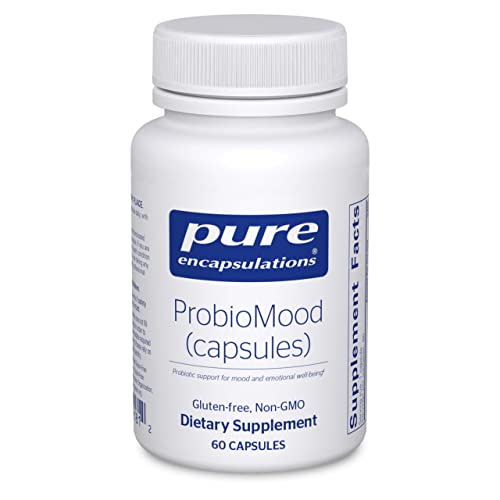
PURE ENCAPSULATIONS
Relaxation * Cognition * Microbiome * Immunity

THORNE
Gut * Immunity * Weight Management * Lactobacillus Gasseri KS-13


QUICKSILVER SCIENTIFIC
Calmness * Neurotransmitter * Stress * Anxiety * Cognition

APOLLO NEURO
Sleep Aid * Stress Relief * Focus * Energy


JORDAN A. MADISON
Evidence-Based * Well-Being * Affirmations * Breathing * Exercises
This article provides general information and discussions about health and related subjects. The information and other content provided in this blog, or in any linked materials, are not intended and should not be construed as medical advice, nor is the information a substitute for professional medical expertise or treatment.