

The answer is usually in your sleep stages — not just your sleep time.
Every night your brain cycles through 4 stages of sleep, and each one does something different for your body and mind. Once you understand what’s actually happening, you’ll stop panicking about your tracker data and start working with your biology instead of against it.
Shortcut version:
Light sleep = memory.
Deep sleep = body repair.
REM = emotional health.
Awake = completely normal.
We researched the science so you don’t have to. We got your back, sister. 💚
SHORT ANSWER: What Are the 4 Stages of Sleep?
There are 4 stages of sleep: Awake, Light Sleep (NREM 1 & 2), Deep Sleep (NREM 3), and REM Sleep. Your body cycles through all four stages 4–5 times per night in roughly 90-minute cycles. Each stage serves a distinct purpose — and you need all of them.
KEY TAKEAWAYS:
- Light sleep makes up ~50% of your night and is vital for memory and creativity — it’s not “wasted” time
- Deep sleep is when your body physically repairs itself — it happens mostly in the first half of the night
- REM sleep is essential for emotional balance and learning — it increases in the second half of the night
- Brief awakenings during the night are completely normal — they only matter if you feel fatigued the next day
- Magnesium Glycinate supports the nervous system calm needed to reach and sustain deep sleep
QUICK START — What to Do Tonight:
- Take Magnesium Glycinate (200–400mg) about an hour before bed
- Aim for 7–9 hours to allow 4–5 full 90-minute cycles
- Stop checking your sleep score first thing in the morning — check how you feel first
- Avoid caffeine after 2pm (it disproportionately cuts REM sleep)
📥 Want our complete Spring sleep + supplement guide?
Get the Spring Foundational Guide free — what to take, when, and why it works for Gen X women.
You’ll get it immediately + a few bonus tips. Unsubscribe anytime (but we think you’ll stay 💚).
In This Article:
Stage 1 Awake — Why It’s Normal and Not a Problem
Here’s something your tracker won’t tell you upfront: waking up during the night is completely normal.
Brief awakenings happen naturally between sleep cycles — you may not even remember them. Your brain is just resurfacing before diving into the next cycle.
Awake time only becomes a concern if you feel fatigued during the day or if you’re seeing a lot of it combined with low blood oxygen or irregular breathing — which can signal something like sleep apnea worth discussing with your doctor.
If you wake up feeling rested and energetic, your awake time is a non-issue. The number on your tracker doesn’t define how recovered you actually are.
If you’re tossing and turning a lot at night, check out our guide on how to reduce tossing and turning — there are some very fixable causes.
Stage 2 Light Sleep — The Underrated Workhorse (50% of Your Night)
Don’t let the name fool you. Light sleep is not lightweight.
It’s actually the most common stage of sleep — making up about 50% of your total sleep time — and it’s doing critical work for your brain the entire time.
What light sleep actually does:
- Memory consolidation — converting short-term memories into long-term storage
- Creativity boost — your brain makes unexpected connections during this stage
- Physical prep — heart rate slows, body temperature drops, muscles relax
- Mental housekeeping — your brain tidies up and organizes the day’s information
Light sleep has two sub-stages: NREM 1 (the “falling asleep” stage, lasting only a few minutes) and NREM 2 (the bulk of your light sleep, where your muscles may twitch and your brain waves slow into larger, more rhythmic patterns).
If your tracker shows you got “too much” light sleep, don’t panic. Your body is cycling the way it’s supposed to. Light sleep is restorative — it just doesn’t have the PR that deep sleep and REM get.
Stage 3 Deep Sleep — Where Your Body Heals Itself
This is the stage most of us are chasing — and for good reason.
Deep sleep (also called slow-wave sleep) is when your body does its most intensive physical repair work. Growth hormone is released. Muscles recover. Your immune system gets reinforced. Your brain flushes metabolic waste. It’s essentially your body’s maintenance window.
What’s happening during deep sleep:
- Heart rate and breathing drop to their lowest point of the night
- Muscles are fully relaxed
- Brain produces slow delta waves — hence “slow-wave sleep”
- It’s the hardest stage to wake from (that groggy “where am I” feeling = deep sleep interrupted)
Deep sleep occurs mostly in the first half of the night. This means going to bed earlier — not just sleeping longer — gives you more deep sleep. Staying up until midnight and sleeping until 8am shifts your sleep window away from peak deep sleep territory.
What disrupts deep sleep?
- Alcohol (it suppresses deep sleep in the second half of the night)
- Irregular sleep schedules
- Magnesium deficiency — very common in women over 40
- High cortisol / chronic stress
Magnesium Glycinate (200–400mg before bed) supports the nervous system calm your body needs to drop into and sustain deep sleep. It’s one of the most evidence-backed, affordable upgrades you can make. This is the form that actually works — not Magnesium Oxide, which mostly just gives you digestive chaos.
Hard workout yesterday? Research shows your body will prioritize extra deep sleep the following night to repair muscle tissue. That’s your biology working exactly as intended.
It’s in the Spring Foundational Guide — free, and takes about 2 minutes to implement.
Stage 4 REM Sleep — Your Emotional Reset Button
REM stands for Rapid Eye Movement — and yes, your eyes are literally moving quickly behind your closed eyelids during this stage.
But the real action is in your brain. REM sleep is where emotional processing happens, learning gets locked in, and creativity gets its biggest boost. Think of it as your brain’s nightly therapy session.
What happens during REM:
- Brain activity spikes — mimicking the patterns of being awake
- Heart rate and breathing become irregular
- Most vivid dreaming occurs (about 80% of dream recall comes from REM)
- Your body temporarily loses muscle tone — this is protective, so you don’t act out your dreams
- Emotional memories get processed and filed
REM sleep increases in the second half of the night. If you’re consistently sleeping only 5–6 hours, you’re disproportionately cutting your REM — which is why short sleepers often feel emotionally reactive, foggy, and less creative even when they think they “got enough.”
Studies consistently show that REM sleep plays a significant role in emotional regulation — getting enough of it may help reduce the intensity of negative emotional reactions. Skimp on REM, and your emotional resilience takes the hit first.
Caffeine is a REM killer. It can shorten your overall sleep window, and because REM happens later in the night, shorter sleep disproportionately cuts into it. Cutting off caffeine after 2pm makes a bigger difference than most people expect.
What Does a Normal Night Actually Look Like?
Here’s the thing nobody explains clearly: you don’t go through the stages once and you’re done. Your body cycles through all 4 stages repeatedly throughout the night.
A typical night (4–5 cycles of ~90 minutes each):
- Early cycles (first half of night): More deep sleep, less REM
- Later cycles (second half of night): More REM, less or even no deep sleep
- Between cycles: Brief awakenings — completely normal, often not remembered
This is why total sleep time matters. 5 hours cuts your REM. 6 hours shortchanges your second wind of deep sleep. Getting 7–9 hours gives your body time to run all its cycles and collect what it needs from each stage.
Your average time per stage in a full night (these vary widely by individual and age):
- Light sleep: ~50% of total sleep
- Deep sleep: ~15–20% (decreases with age)
- REM sleep: ~20–25%
- Awake: ~5% (normal, especially between cycles)
If you’re curious about tracking yours, the Oura Ring 4 provides detailed sleep staging data — useful for spotting patterns over time (not for grading yourself every morning).
Want to understand the bigger picture of why sleep quality matters as much as sleep quantity? Read our guide on how to actually improve sleep quality.
How to Support All 4 Sleep Stages
You can’t force your body to spend more time in any specific stage — but you can create the conditions that let each stage happen naturally.
The simple protocol:
- Get 7–9 hours — enough time for 4–5 full cycles is the single biggest lever
- Consistent wake time — anchors your circadian rhythm so your body knows when to cycle through each stage
- Magnesium Glycinate before bed — supports the nervous system calm needed for deep sleep (200–400mg, 1 hour before sleep)
- Cut caffeine by 2pm — protects your REM cycles later in the night
- Limit alcohol — it may help you fall asleep but suppresses deep and REM sleep in the second half of the night
- Exercise regularly — studies show it increases deep sleep the following night, especially after intense workouts
If you feel exhausted even after adequate sleep hours, low Vitamin D could be part of the equation. Most women in perimenopause are deficient without knowing it. Vitamin D3 + K2 is worth adding to your stack — it plays a role in melatonin regulation and overall sleep timing.
Still wondering why you’re dragging? Check out Where Did All My Energy Go? — there are usually a few fixable culprits.
And if the stress about sleep is part of your problem (very common for Gen X women), read our piece on how to stop stressing about sleep. The anxiety loop is real — and there’s a way out.
FAQ: Sleep Stages, Answered Simply
Q: Which sleep stage is most important?
A: All four are important — they serve completely different functions. Deep sleep repairs your body; REM restores your emotional health and supports learning; light sleep consolidates memory. Skipping any of them has consequences.
Q: Why do I feel groggy when I wake up from a nap?
A: You probably woke up from deep sleep. Naps longer than 30 minutes can pull you into NREM Stage 3, and waking mid-cycle causes that disoriented “sleep inertia” feeling. Keep naps to 20–30 minutes to avoid it.
Q: How do I get more deep sleep?
A: Go to bed earlier (deep sleep peaks in the first half of the night), take Magnesium Glycinate before bed, exercise regularly, reduce alcohol, and keep a consistent sleep schedule. You can’t force deep sleep — but you can stop blocking it.
Q: Can I make up for lost REM sleep?
A: Partially. After sleep deprivation your body will prioritize deep sleep for the first few nights, then REM catches up. But this “REM rebound” isn’t perfect compensation — chronic REM loss has cumulative effects on mood and cognition.
Q: Is it normal to be awake during the night?
A: Yes, completely. Brief awakenings between cycles are a normal part of sleep architecture. They only matter if they’re long, frequent, and leaving you fatigued — in which case it’s worth mentioning to your doctor.
Q: Does Magnesium Glycinate really improve sleep stages?
A: Some research suggests magnesium supplementation can improve sleep quality, including the ability to reach and maintain deep sleep, by supporting GABA — your brain’s calming neurotransmitter. Many women report noticeable improvement within 1–3 weeks.
Q: Why does my deep sleep decrease as I get older?
A: Deep sleep naturally declines with age, starting around your 30s and accelerating through perimenopause. Consistent sleep habits, magnesium, regular exercise, and limiting alcohol can help preserve it. It’s not inevitable to lose all of it.
- Why am I still tired after 8 hours of sleep? — Sleep quality, not just quantity, is usually the issue. Read this guide.
- Why am I so exhausted in winter? — Vitamin D deficiency plus circadian rhythm disruption. Here’s what’s happening.
- How do I stop waking up at 3am? — Usually hormonal, cortisol, or blood sugar-related. Start here.
The Bottom Line
Your sleep isn’t a single event — it’s 4–5 complete cycles, each with a different job to do. Light sleep files your memories. Deep sleep heals your body. REM resets your emotions. Awake time is just your brain coming up for air between cycles.
Stop chasing one magic number and start giving your body enough time to run all its cycles. That, plus the right support (Magnesium Glycinate, consistent wake time, less caffeine after 2pm), is the whole game. 💚
The Spring Foundational Guide has everything in one place, including what to take and when.
You’ll get it immediately + a few bonus tips. Unsubscribe anytime.
Shop This Article
We carefully research and select every product mentioned in this article based on quality, ingredients, and reviews—not commissions. Our mission is to simplify wellness for you, and we regularly update our recommendations to bring you the best options.
Magnesium Glycinate (Azure Biogenics) — The form that actually supports deep sleep without the digestive chaos. I take this every night. 200–400mg, 1 hour before bed.
Vitamin D3 + K2 — Supports melatonin regulation and sleep timing. D without K is incomplete. Most of us are deficient and don’t know it.
Women’s Probiotic (50 Billion CFU) — The gut-brain connection affects sleep quality more than most people realize. Strain-specific, quality matters here.
Oura Ring 4 — The most detailed sleep staging available in a wearable. Best used for weekly trends, not daily grading.
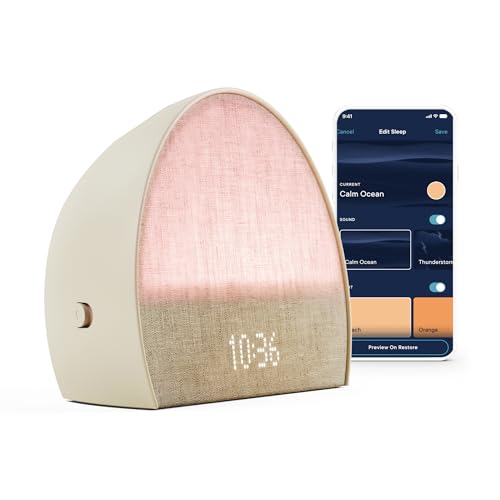
Hatch Restore 2 (Sunrise Alarm Clock) — Wakes you gradually with light instead of a jarring alarm. Gentler cortisol response = better mood all morning.
Full Spring Foundation Supplement Stack → — All five foundational supplements in one place.
💚 We carefully research and select every product mentioned based on quality, ingredients, and reviews—not commissions.
📚 References (click to expand)
- Carskadon MA, Dement WC. Normal human sleep: An overview. Principles and Practice of Sleep Medicine, 2011.
- Walker MP. Why We Sleep: Unlocking the Power of Sleep and Dreams. Scribner, 2017.
- Abbasi B, et al. The effect of magnesium supplementation on primary insomnia. Journal of Research in Medical Sciences, 2012.
- Czeisler CA, et al. Stability, precision, and near-24-hour period of the human circadian pacemaker. Science, 1999.
- Dattilo M, et al. Sleep and muscle recovery. Medical Hypotheses, 2011.
- Peever J, Fuller PM. The biology of REM sleep. Current Biology, 2017.
- Roehrs T, Roth T. Caffeine: Sleep and daytime sleepiness. Sleep Medicine Reviews, 2008.
- National Institutes of Health. Brain basics: Understanding sleep. ninds.nih.gov, 2023.
- Oura Research. Sleep stages and what they mean. ouraring.com, 2023.
- Grandner MA, et al. Sleep duration and cardiometabolic disease. Sleep Medicine Reviews, 2010.
💾 Save this for later | 📲 Send it to someone who needs it | 💬 Tag a friend in your group chat 💚

AZURE BIOGENICS
Muscle * Nervous System * Bones * Energy * Mood

SEVEN MINERALS
Highest Quality * Pure Magnesium * Sore Muscles * Relaxation

THORNE
Calmness * Clarity * Sleep * Energy * Metabolism
HATCH BABY
Sound Machine * Smart Light * White Noise * Unwind Gently